

Small by Choice: Why a Smaller Wedding Isn't a Compromise
Rema Merrick | September 21, 2026
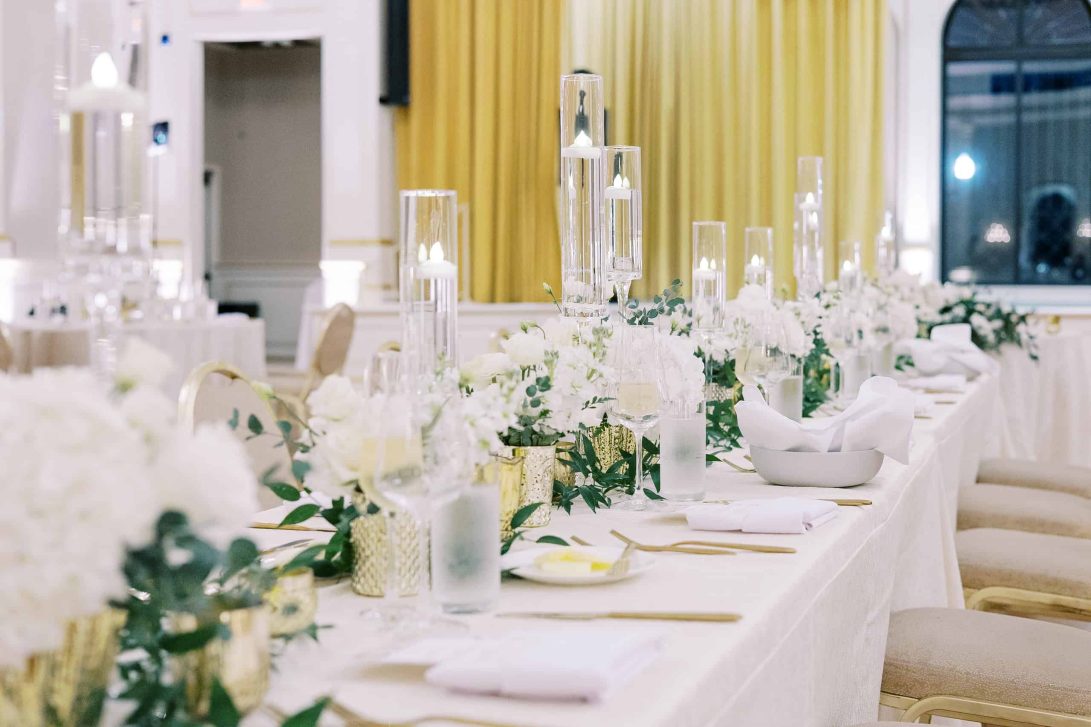
Photography: K&K Photography | Venue: Museum of Fine Arts, St Petersburg | Florals: Wonderland Floral Art | Event Rental/Catering: Constellation Culinary Group
Small by choice: Why a smaller wedding isn't a compromise
Many people assume that having a small wedding means you don't have the budget for a larger one or that you have to compromise on style, luxury, or meaning. But that isn't necessarily the case. You can choose a smaller wedding simply because it's what you prefer. A wedding with 20 guests can be just as elegant, luxurious, and memorable as a wedding with 200. You can wear an elaborate wedding dress, celebrate in a grand ballroom, serve an exceptional dinner, or incorporate traditions that are meaningful to you. You can also exchange vows at a courthouse and celebrate afterward with dinner at your favorite restaurant. Neither approach is inherently better. The question is what you and your partner want your wedding to look and feel like.
For my husband and me, two very different wedding experiences helped us discover that smaller celebrations were what we preferred. Those experiences also became the inspiration for The Petite Pieris.
Our first wedding: A simple but elegant elopement
In October 2021, my now-husband and I were living near Atlanta, Georgia. After six years together, we decided it was time to get married. We chose December of that same year, which gave us only two months to plan. We were also in the middle of the COVID-19 pandemic. Between the short notice and travel restrictions, many of our friends and family members wouldn't be able to attend. So, we decided on a simple but elegant elopement.
I scoured the internet looking for a quaint, historic place to get married. I wanted the planning to be as simple as possible, so finding a venue that offered an all-inclusive wedding package was important to me. Ideally, I wanted to just pay the money and show up!
To be honest, part of me was also pleased about eloping because it meant I wouldn't have to be the center of attention. My husband is comfortable with that kind of attention, but it makes me extremely uncomfortable and self-conscious. Eventually, I found a beautiful historic bed-and-breakfast in the heart of downtown Atlanta. The venue offered a wedding package that fit our needs, which made planning straightforward. My only remaining task was to find a photographer who was available on short notice. Fortunately, I found one.
Our elopement was beautiful, intimate, easy to plan, and meaningful to us. We enjoyed an elegant experience without the logistics of a large wedding. For my husband and me, it was exactly what we wanted.
My biggest takeaway was that we had chosen a small wedding without compromising on style, luxury, or meaning. We hadn't settled for a lesser version of a wedding. We had celebrated our marriage in a way that worked for us.
Our second wedding: A celebration with family and friends
Two years later, we decided to have a formal wedding ceremony and reception with our close friends and family. By then, we were living in St. Petersburg, Florida, and had a year to plan our celebration. This time, we wanted to create an experience that was memorable for our guests and meaningful to us as a couple. We invited approximately 50 people, and about 40 attended. Although this celebration was larger than our elopement, it was still a relatively small wedding. I wanted to incorporate the traditions that mattered to us while adding personal elements that reflected our lives, experiences, and backgrounds. This wasn't about keeping our budget as small as possible. It was about deciding what we wanted our wedding to include.
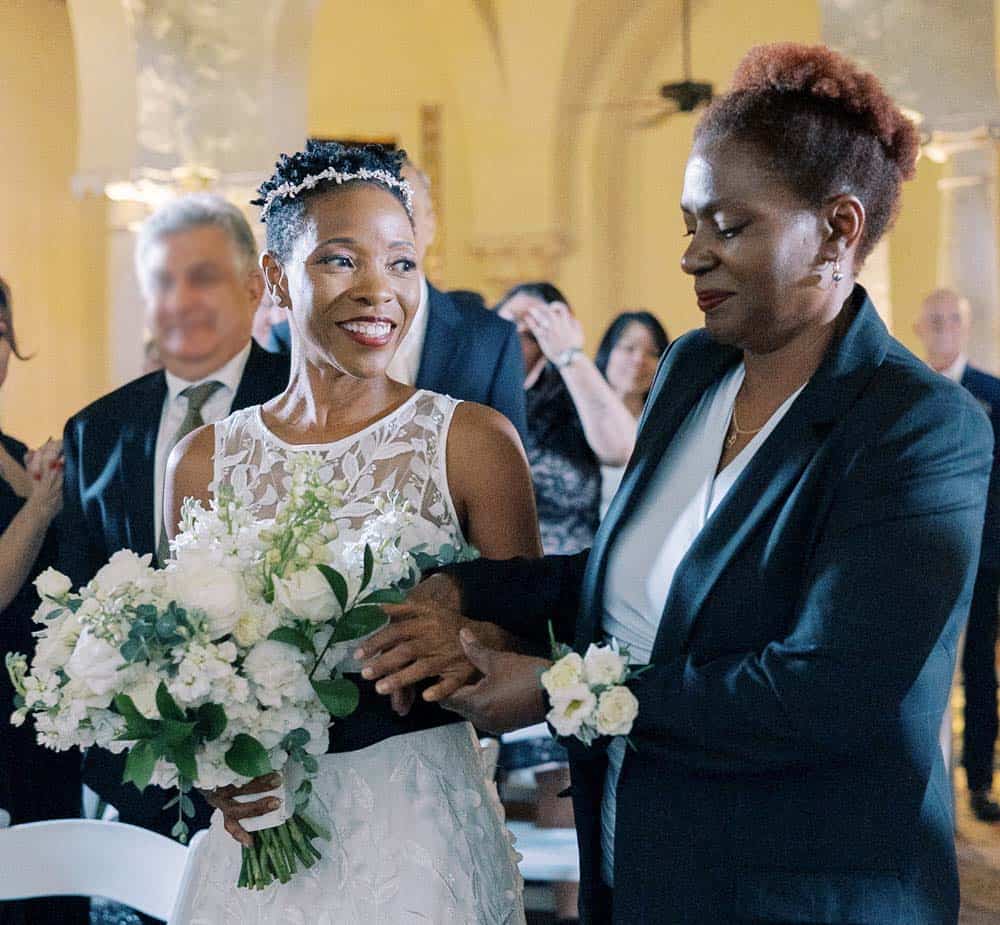
Here are a few ways we made the celebration our own.
My sister walked me down the aisle.
My father had passed away, so my older sister walked me down the aisle instead. This was a special experience for both of us. It allowed me to keep a tradition I wanted while choosing the person who would share that moment with me.
We skipped the wedding cake.
We had a wedding cake at our elopement and didn't eat any of it. I didn't want another cake to go to waste, so we skipped the traditional wedding cake and cake-cutting ceremony. Instead, we served a variety of petite desserts. We still had something sweet for our guests to enjoy without including a tradition that wasn't particularly important to us.
I wore an Austrian dirndl as my reception dress.
The year before our celebration, I purchased a beautiful dirndl while visiting Austria. A dirndl is a traditional dress worn in Austria and parts of Central Europe, including at celebrations and special occasions. My husband spent a significant part of his youth in Austria and attended university there, so wearing the dress had special meaning for both of us. It wasn't a conventional wedding reception dress, but it was a personal choice that connected our celebration to his life and experiences.
We used digital wedding stationery.
All our wedding stationery was digital, including our save-the-dates, invitations, pre-wedding activity announcements, and thank-you cards. I designed the invitations in Adobe Illustrator and sent them through
Using a digital platform helped me keep everything organized in one place, including RSVPs, dinner selections, dietary requirements, and hotel information. It also eliminated the need to print, address, and mail invitations and then track responses separately. For me, this was one of the most practical decisions we made. It reduced the amount of administrative work involved in planning our wedding.
Our celebration included traditions we loved, traditions we modified, and traditions we skipped altogether. The result was a wedding that reflected our preferences rather than a predetermined list of things we were
supposed to do.
Wedding lessons: What our two weddings taught me
Our elopement taught me that a small wedding didn't have to mean a lesser experience. Our second wedding taught me something else: smaller celebrations were actually what I preferred. I enjoyed being able to spend time with our guests, choose the traditions that mattered to us, and create a celebration that reflected our personalities and experiences.
But planning our second wedding also revealed a problem. I found myself overwhelmed by the amount of wedding planning information available online. There were countless websites, checklists, timelines, and articles, but I struggled to find a clear starting point. Much of the information seemed to be geared toward weddings with 100 or more guests. Some of it didn't apply to our 50-person celebration, while other information I needed was difficult to find. I also wanted to incorporate nontraditional elements, such as digital invitations, a reception dress that wasn't a conventional bridal gown, and alternatives to familiar wedding traditions. The websites weren't bad resources. They simply weren't built around the questions I needed answered.
I wanted a process that would help us identify what was important to us, decide what to include, and then figure out how to bring those decisions to life. Perhaps this is partly because of my background in instructional design. I spent years developing process-oriented training for flight attendants at a large commercial airline. I like having a clear process, knowing what decisions need to be made, and understanding how the different pieces fit together. When planning our wedding, I wanted that same kind of guidance. And that's what inspired The Petite Pieris.
The Petite Pieris philosophy
The Petite Pieris is a wedding blog dedicated to helping couples plan smaller celebrations that reflect their personalities, priorities, and preferences. My goal is to help couples identify what they want from their wedding and then provide practical ideas, resources, and step-by-step guidance to help them create it. That might mean planning a 10-person wedding at a beachfront restaurant or a 50-person celebration at a local museum. It might mean keeping every tradition you love, modifying a few, or leaving some out altogether.
I want to help couples move beyond a generic wedding checklist and make decisions based on the experience they actually want. That includes choosing a guest count, finding a venue, deciding which traditions to include, and figuring out how to put the practical details together.
My hope is that The Petite Pieris makes planning a smaller wedding more manageable without asking couples to compromise on the things that matter to them.
Here are a few ideas that guide this philosophy:
- You don't need to justify a 30-person wedding or expand your guest list because relatives expect it.
- You don't have to reject tradition simply because you're planning a nontraditional wedding.
- You can wear an elaborate wedding dress and choose not to have a bridal party.
- You can exchange vows in a museum, coffee shop, garden, restaurant, courthouse, or historic inn.
- You can spend a substantial portion of your budget on an elaborate floral installation and very little on wedding favors.
- You can have a small wedding that is simple and understated or one that is extravagant and elaborate.
The goal isn't to follow a particular wedding formula. It's to decide what you want and create a celebration around those choices.
Small wedding possibilities: What becomes possible when you intentionally reduce the scale
Choosing a smaller wedding can open up possibilities that may be difficult, expensive, or impractical with a larger guest count. You can be more selective about who attends, explore unconventional venues, plan on a shorter timeline, and spend your budget on the experiences and details that matter most to you.
Here are seven possibilities worth considering.
You can choose your guest list with intention.
If who shares your wedding day with you is important, a smaller wedding gives you the opportunity to be selective about your guest list. Maybe you want to exchange vows with just your partner. Perhaps you want your parents, siblings, and a handful of close friends beside you. Or maybe you want to invite 30 people who have played an important role in your lives.
A smaller guest list gives you room to consider each invitation rather than automatically including distant relatives, coworkers, or acquaintances because you feel obligated to invite them. The question becomes less about how many people you should invite and more about who you genuinely want to share the experience with.
You can explore unconventional wedding venues.
A smaller guest count opens up venue options that might not accommodate a traditional wedding with 150 or 200 guests. Imagine a small wedding at your favorite coffee shop that boasts a colorful Art Deco interior. Or picture a ceremony beneath a large, historic banyan tree, followed by dinner at a favorite local restaurant. A coffee shop, private dining room, art gallery, or garden may not have the space or facilities for a large wedding. But with 15 or 20 guests, some of these places become realistic possibilities.
Instead of limiting your search to traditional wedding venues, you can begin looking at places you already love and asking whether they could accommodate your celebration. Of course, unconventional venues may have restrictions involving permits, capacity, accessibility, or private events. But a smaller guest count gives you more places to explore.
You may be able to reduce planning stress and logistical complexity.
A smaller wedding doesn't guarantee a stress-free planning experience. You can plan an elaborate wedding for 20 people or a relatively simple celebration for 200. However, reducing your guest count can make certain aspects of planning easier to manage. Consider the difference between arranging seating, meals, transportation, and accommodations for 20 guests versus 200. With a smaller group, you might reserve one long table at a restaurant instead of arranging a large reception with multiple seating sections, a separate catering team, and a detailed floor plan. You may also have fewer invitations to manage, fewer meal selections to collect, and less transportation to coordinate. The amount of planning still depends on the wedding you want to create, but a smaller guest count can reduce the number of moving parts.
You can plan a wedding on a shorter timeline.
Not everyone wants to spend a year or more planning a wedding. Perhaps you want to get married next month. Maybe you're visiting a city you love and decide you'd like to exchange vows while you're there. Or perhaps you simply don't want a long engagement.
A smaller wedding can make a shorter planning timeline more manageable. An elopement with just the two of you might require arranging the legal requirements, finding an officiant, choosing a location, and booking a photographer if you want one. A microwedding with 20 guests might involve reserving a private dining room, arranging a small ceremony, and sending digital invitations. Larger weddings often require coordinating venues and vendors that book many months in advance.
With fewer guests and a simpler event, you may have more flexibility to plan in weeks or months rather than a year more. This was certainly true of our Atlanta elopement. We decided to get married in October and exchanged vows in December. A smaller wedding gives you the option to plan more spontaneously. You can still spend two years planning your intimate wedding if that's what you want.
You can put your wedding budget toward a different kind of experience.
A smaller wedding isn't automatically an inexpensive wedding. You might choose to spend just as much on a wedding for 20 guests as someone else spends on a wedding for 100. The difference is where that money can go. Let's say you've always imagined an enchanting, Cinderella-inspired wedding. You want an elaborate floral installation, a beautifully designed tablescape, an exceptional dinner, and a venue that feels like something out of a fairy tale. Creating that experience for 200 guests might be financially out of reach. Creating it for 20 could be more manageable. Or perhaps you would rather spend less on the wedding itself and put the remaining money toward a honeymoon, a down payment on a home, or another goal. Neither approach is inherently better.
Reducing your guest count gives you the opportunity to reconsider how you want to use your wedding budget. Instead of asking how to accommodate the largest possible number of guests, you can ask what kind of experience you want to create and how many people you want to share it with.
You can spend more personal time with each guest.
Think about a wedding with 200 guests. Even if you spend just five minutes speaking with each person, that's more than 16 hours of conversation. And that's before the ceremony, dinner, photographs, dancing, and everything else you have planned! With 20 or 30 guests, you have a better opportunity to spend time with the people who came to celebrate with you. You might have a long conversation with your grandmother over dinner, share a laugh with an old friend, or sit down with your siblings without feeling that you need to rush off to greet another table. If spending meaningful time with your guests matters to you, a smaller wedding can make that experience more achievable.
You can create a celebration that feels comfortable for you.
Not everyone wants to be the center of attention, even on their wedding day. Some people love a grand entrance, a packed dance floor, and a room full of people watching their first dance. Others would rather exchange vows quietly, enjoy a wonderful meal, and spend the evening talking with a few close friends.
If large crowds leave you feeling drained, the idea of celebrating with 150 guests might sound more exhausting than exciting. A smaller wedding gives you the opportunity to create a celebration that better suits your personality and preferences. You could have a private ceremony with just your partner, followed by dinner with your closest family and friends. You could skip the grand entrance, the receiving line, and the speeches. You could choose a venue where everyone sits together rather than spreading out across a large ballroom. And if you love being the center of attention? You can absolutely have your grand entrance, first dance, and Cinderella moment with 20 guests.
Reducing the scale doesn't mean reducing the celebration. It means deciding what you want the celebration to include.
Small by choice, spectacular by design
When my husband and I decided to elope in Atlanta, I didn't realize that experience would eventually lead me to create The Petite Pieris. I simply wanted to marry the person I loved in a beautiful setting without spending months planning a large event.
Our second wedding gave us the opportunity to celebrate with family and friends, incorporate meaningful traditions, and create an experience that reflected who we were as a couple. Both celebrations were different. Both were exactly what we wanted at that point in our lives. And neither required us to compromise on the things that mattered to us.
That's what small by choice means to me. It isn't about having the smallest possible wedding, rejecting tradition, or spending as little money as possible. It's about choosing a smaller celebration because that is what you want, then deciding what to do with the possibilities that choice creates.
Maybe you want an elaborate wedding in a museum with 50 guests. Maybe you want to exchange vows at a historic inn with just your partner. Or maybe you want a simple ceremony followed by a wonderful dinner with 20 of your favorite people. You get to decide. The Petite Pieris is here to help you figure out what that celebration could look like and how to bring it to life.
Small by choice, spectacular by design.
Please note: This post is not sponsored or supported by any of the establishments or organizations mentioned. I’m not being paid for this content; everything I share is based on my own experience, research, and personal opinion.
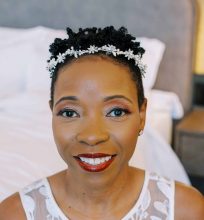
Photography: K&K Photography
Make-up: Tricia Montaque
Rema Merrick
Hi! I’m a St. Pete local, small-wedding enthusiast, and long-time vegetarian. When I’m not researching or writing articles for The Petite Pieris, you’ll usually find me running along the waterfront at Vinoy Park, taking a hot yoga class, or enjoying a cup of coffee at Bandit Coffee in St. Pete’s Grand Central District. In a former life, I’ve been an insurance agent, flight attendant, and instructional designer—experiences that still shape how I approach storytelling and thoughtful celebration.
Small wedding ideas, delivered thoughtfully.
Get the latest Petite Pieris articles, planning ideas, and inspiration for creating a smaller celebration that feels entirely your own.
Sign Up
Thoughtful small-wedding inspiration, planning ideas, and new articles. Unsubscribe anytime.
© 2026 The Petite Pieris ™. All Rights Reserved.