

How Will You Enter Your Wedding Ceremony? 4 Ideas for a Small St. Pete Wedding
Rema Merrick | October 8, 2026

How Will You Enter Your Small Wedding Ceremony
Your ceremony entrance can set the tone for your entire wedding and create anticipation for what guests can expect. It is a distinct part of the ceremony that deserves some consideration. You may not realize it, but you have options for how you choose to enter your wedding ceremony space and those options may be more or less practical depending on your guest count.
Choosing to have a small, intimate wedding opens up possibilities for ceremony entrances that may not be functional with larger guest counts. For example, with a 20-guest wedding you can choose to have everyone enter the wedding space together instead of having a traditional wedding processional that separates the guests from the wedding party. However, trying this approach with 100 guests may be overwhelming, chaotic, and impractical.
Ceremony spaces designed for smaller groups may also be better suited to some types of entrances than others. So, before you decide how you want to enter the ceremony space, look at the venue and consider what works naturally with its layout. A small wedding in a garden, museum, coffee shop, courtyard, restaurant, or other unexpected venue may not even have a traditional aisle. Consider the options the ceremony space makes possible and go from there.
4 Ideas for Entering Your Small Wedding Ceremony
In this article, I'll share four ways to enter a wedding ceremony that work especially well with smaller guest counts, along with a St. Pete wedding ceremony entrance example. For each option, you'll see how it works, an approximate guest-count range and practical details to consider.
Keep in mind that the guest-count ranges are only guidelines. They reflect where each setup tends to work well, but your venue, layout, accessibility needs, and ceremony style may make a different number work just as well.
Skip the Entrance
Works especially well with 10 to 40 guests
How It Works
Although it may seem obvious, you may not realize that a traditional wedding ceremony entrance is optional. If you're eloping or having a very small wedding, a formal wedding ceremony entrance may not add much to the experience.
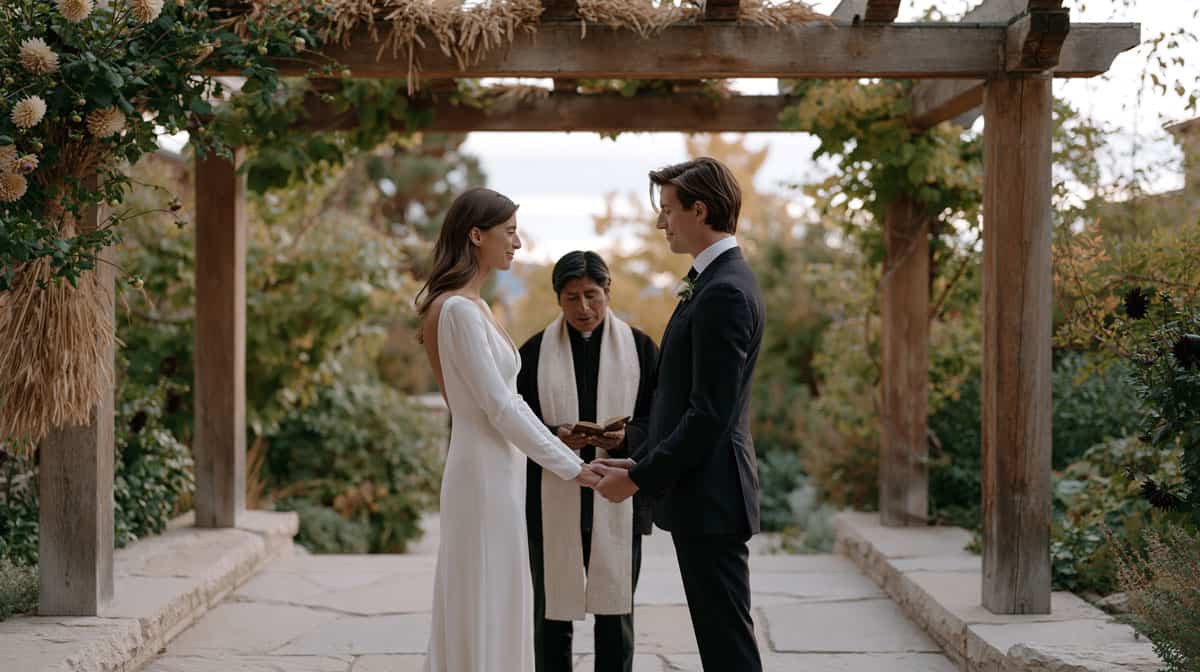
For elopements and other smaller weddings, skip the entrance altogether. Everyone can simply gather at the ceremony location. You can mingle with your guests before the ceremony; then, when it's time for the ceremony to begin, the officiant can invite everyone to gather or take their places. You and your partner stand together, the conversation settles, and the ceremony begins.
There is no formal entrance because there doesn't need to be one. The gathering simply becomes the ceremony.
Why a Smaller Guest Count Matters
A smaller guest count can make skipping a formal entrance feel more natural because the ceremony already feels intimate. With fewer people, you may be able to greet guests beforehand, mingle as they arrive, or simply take your place at the ceremony area without needing a formal reveal. The transition into the ceremony can feel more like a gathering of people who know one another and less like a performance with a clearly defined audience and entrance.
What You Should Consider
Ceremony Start Signal: Decide how you will signal that the ceremony is beginning. The officiant can make an
announcement, the music can change or fade, or guests can simply be invited to gather around you.
Arrival at the Ceremony: Consider where you and your guests will spend the few minutes before the ceremony starts. The space should allow people to mingle comfortably without making the transition into the ceremony feel awkward or confusing.
·
Accessibility: Verify the accessibility and sightline accommodations necessary for your guests. Even without a traditional aisle, everyone should be able to move easily into place and see and hear the ceremony once it begins.
·
Weather: For an outdoor ceremony, have a plan for heat, humidity, rain, strong sun, and cold. Consider a second venue
option if it is raining, heaters if it is cold, or fans if it is hot and humid.
·
Photography: If there is no formal entrance, tell your photographer where you and your guests will gather beforehand so they can capture the transition from mingling to the ceremony.
Walk to the Ceremony Space Together
Works especially well with 6 to 20 guests
How It Works
With a smaller guest count, you, your partner, and your guests can walk to the ceremony area together instead of guests waiting for you and your partner to arrive. On the flip side, this type of ceremony entrance may not be practical with a larger guest count.
A large guest count could turn the experience into crowd management where you are now focused on primarily ensuring the safety and orderliness of a large group instead of leading a short, casual stroll to the wedding ceremony space.
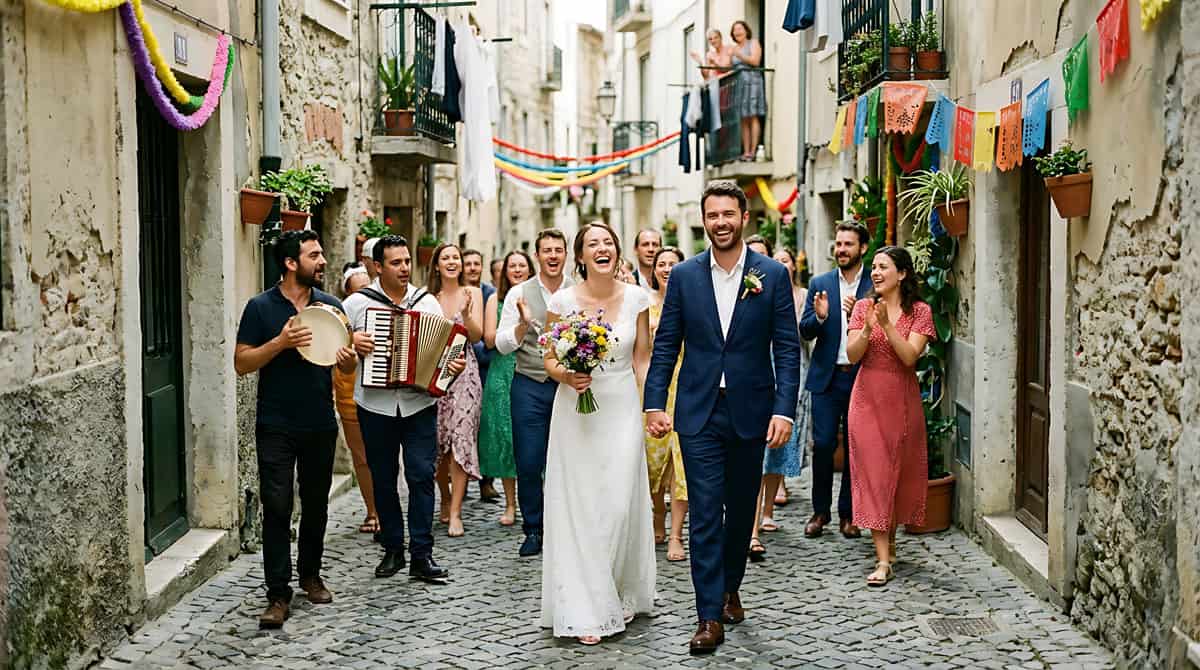
For example, you could host an intimate 10-person wedding ceremony on beautiful Spa Beach located on the north side of the St. Pete Pier. You and your guests meet at the Spa Beach Pavilion, where everyone mingles while having drinks. After everyone has had time to arrive and mingle, the group takes the short walk to Spa Beach where the ceremony begins.
When everyone walks to the ceremony space together, the couple and guests are the wedding processional. It gives guests the sense that they are an active part of the ceremony and can give the couple a sense of support as everyone moves toward the ceremony together
Why a Smaller Guest Count Matters
Walking to the ceremony space as a group can be easier with a smaller number of guests. Instead of coordinating the movement of 100 or more people, a group of 10 or 15 guests can easily meet at a designated location and walk together. The smaller scale can also make the walk itself feel meaningful, giving guests time to talk, take in the surroundings, and experience the transition to the ceremony together.
What You Should Consider
Meeting Point: Choose a spot that is easy to find and has enough room for everyone to gather without blocking foot
traffic.
Distance: Keep the walk reasonably short from the meeting place to the ceremony space.
Group Size: For a slightly larger group, consider whether someone should lead the walk or make sure no one is left
behind.
Accessibility: Make sure the route works for guests using mobility aids, older guests, children, and anyone who cannot
comfortably walk far. Consider providing wheelchairs or golf carts to get guests to the ceremony space if necessary.
Restrooms and Seating: Particularly if guests are gathering before walking, make sure nearby facilities and seating
are available if needed.
Walk Down the Aisle as a Couple
Works especially well with 10 to 40 guests
How It Works
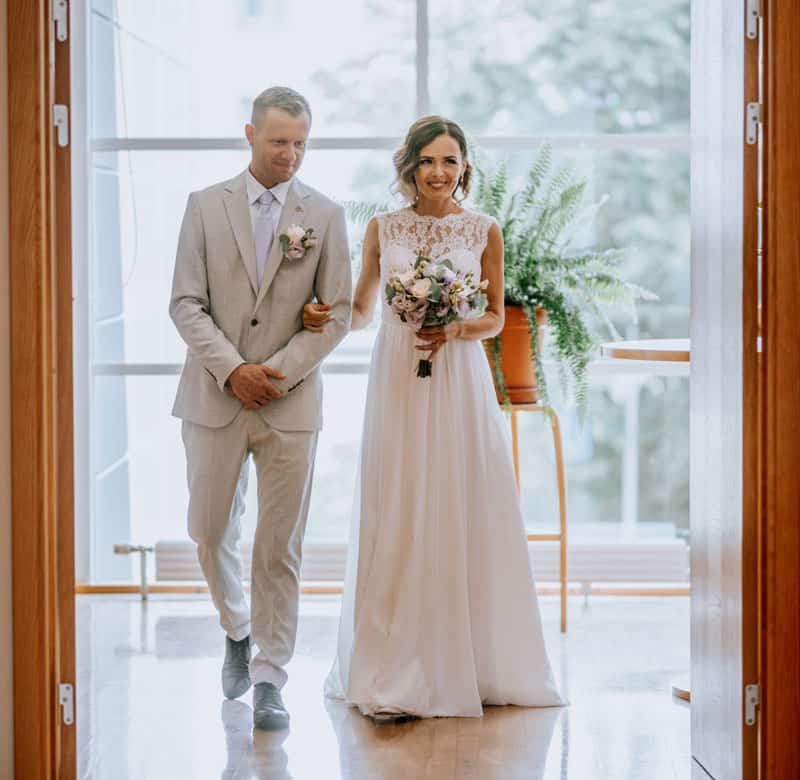
You and your partner can walk down the aisle together, hand in hand or side by side, to the ceremony arch or altar.
You may choose this entrance because it reflects a cultural tradition, because neither of you wants to take the spotlight alone, or because entering together symbolizes equality and the idea that you are entering the marriage as a couple.
There are several ways to make the entrance your own. You can begin together at the back of the ceremony space, meet at the beginning of the aisle and walk the rest together, or enter from separate directions and join one another before approaching the ceremony area.
Rather than one partner waiting at the front while the other makes a formal entrance, the two of you begin the ceremony together. For couples who want the entrance to feel collaborative, relaxed, or less performative, walking in together can be a meaningful alternative to a traditional processional.
Why a Smaller Guest Count Matters
A smaller guest count can make walking down the aisle together feel more personal because the ceremony space is often more compact. With fewer rows of chairs, the aisle may be shorter and guests may sit closer to both the aisle and the ceremony area.
That physical proximity can make it easier for guests to see both of you as you enter and can make the entrance feel connected rather than distant. A smaller seating arrangement can also give you more flexibility to use a narrower aisle or an unconventional ceremony layout without losing sightlines.
What You Should Consider
Meeting Point: Decide where you and your partner will meet or begin together. You can start side by side at the back of
the ceremony space, meet at the beginning of the aisle, or enter separately and join before the final walk. The layout of the venue may make one option feel more natural than another.
Space Layout: Consider the aisle width and ceremony layout. Make sure there is enough room for two people to walk
comfortably side by side, especially if you are wearing a full skirt, long train, veil, or other clothing that needs extra space.
Timing Coordination: Coordinate the timing with your officiant, music, and photographer. Your officiant should know
where you are entering from and when to begin. Your photographer will also need to know the plan so they can position themselves to capture both of you rather than expecting one person to enter while the other waits at the altar.
Processional Adjustment: Decide how this affects the rest of the processional. If you have parents, attendants,
children, or other people participating, determine whether they will walk before you, enter separately, already be seated, or skip a formal processional entirely. Walking in together can work especially well with a very simple processional, but it does not require one.
Use the Venue’s Natural Flow
Works especially well with 10 to 40 guests
How It Works
Consider the natural flow of your ceremony space. An existing walkway, garden path, doorway, staircase or courtyard entrance may already suggest where the two of you should enter. At some venues, a traditional entrance from directly behind the guests may not even be the most practical option. Instead of forcing a conventional aisle into the space, consider whether the architecture or landscape offers a more natural way for you to enter together.
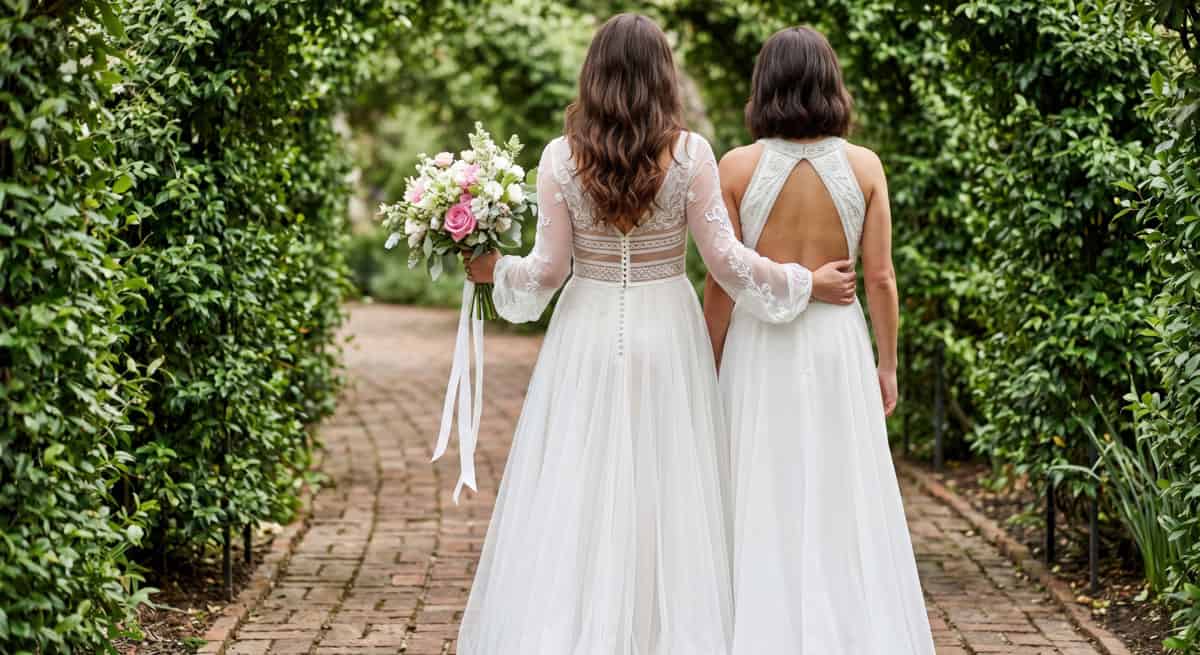
For example, at the North Lawn at Sunken Gardens in St. Petersburg, Florida, the existing walkway and lawn layout naturally guide the processional into the ceremony space from the side rather than from directly behind the guests. Based on how the chairs and ceremony arch are arranged, a couple walking in together may enter from the right or left and move between the guest seating and the ceremony area. Instead of trying to create a traditional straight aisle, it may make more sense to work with the path and landscape that are already there.
Why a Smaller Guest Count Matters
A smaller guest count gives you more flexibility to work with the architecture or landscape that already exists. You may not need a wide, formal center aisle or a large processional route to accommodate dozens of attendants and rows of guests. Instead, you can use a garden path, side entrance, staircase, courtyard doorway, or existing walkway even if the route would be impractical for a much larger wedding. Fewer guests can also make unconventional seating arrangements and side entrances easier to manage without obstructing views or creating congestion.
What You Should Consider
Existing Pathways: Look at the walkways, garden paths, doors, staircases, courtyards, or other built-in routes that already lead into the ceremony space. Using an existing path may create a more natural entrance than adding a traditional straight aisle that does not fit the venue.
Guest Seating: Consider how the chairs are arranged in relation to the available entrance points. A side entrance may
require you to walk alongside or between sections of guest seating before reaching the ceremony area, so make sure there is enough space to move comfortably without disrupting guests.
Accessibility: Check whether the most visually appealing route is also practical for you and anyone else participating in the processional. Stairs, uneven grass, gravel, narrow garden paths, or long walking distances may affect which entrance works best.
Photography and Sightlines: Consider what your guests, photographer, and videographer will be able to see as you enter. Trees, columns, landscaping, walls, or unusual seating arrangements can temporarily block the entrance, so discuss the route with your photographer before the ceremony.
Venue Restrictions: Ask whether the venue limits where guests, couples, or vendors can walk. Historic properties,
museums, gardens, and public spaces may have areas that cannot be used for a processional or may restrict moving chairs, creating temporary aisles, or placing decorations along existing pathways.
A Small Wedding in St. Pete: Ceremony Entrance
Imagine your small wedding ceremony beneath the historic banyan tree at North Straub Park* in downtown St. Petersburg, Florida. Your guests meet you under the lush, enfolding banyan tree. You, your partner, and your guests chat with each other while the photographer takes candid photos.
When it’s time for the ceremony to begin, the harpist stops playing and the officiant invites everyone to gather beneath the tree as the conversation settles. You and your partner stand together and the ceremony begins.
In a setting like this, eliminating the processional doesn't necessarily make the ceremony feel less significant. It
can make the transition into the ceremony feel more intimate and natural.
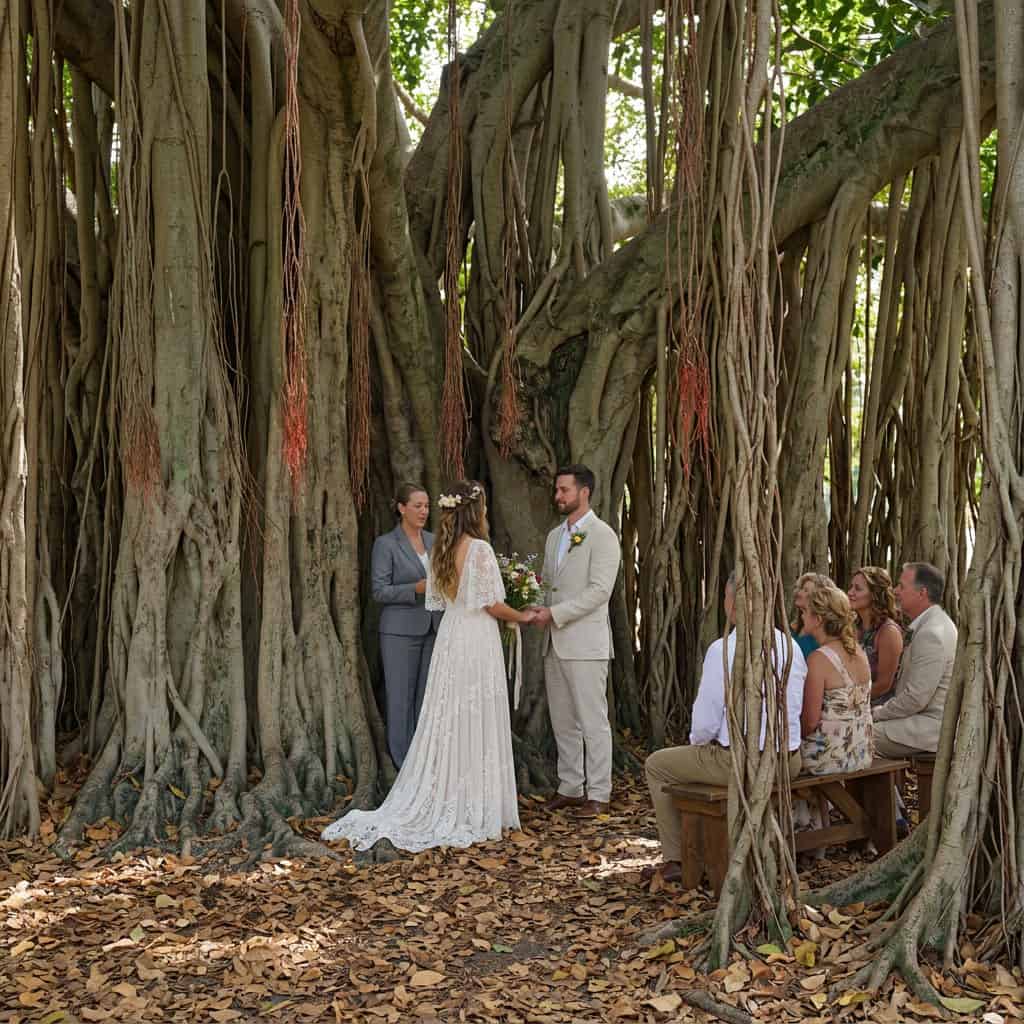
* Ceremonies in North Straub Park require one of the Museum of Fine Arts St. Petersburg's rental options. View the museum’s Private Events page for current information.
Wedding Ceremony Entrance Ideas for a Small Wedding
Entrance Idea
Suggested Guest Count
Why a Smaller Guest Count Matters
Skip the entrance
10 to 40
Feels more natural and intimate
Walk to the ceremony space together
6 to 20
Easier movement to coordinate than a large guest count
Walk down the aisle together
10 to 40
Feels more intimate because the couple is often physically closer to the guests watching
Use the venue's natural flow
10 to 50
Gives more flexibility to work with the architecture or landscape that already exists
Wrap Up
Your ceremony entrance does not have to follow a traditional processional to feel meaningful. You can skip the entrance entirely, walk to the ceremony space with your guests, walk down the aisle together, or let the venue itself shape how you arrive.
A smaller guest count can make these options especially workable because there is often more flexibility in how people gather, move through the space, and experience the ceremony. The most important thing is to choose an entrance that fits the two of you, the setting, and the kind of atmosphere you want to create.
Rather than starting with the question, “How are we supposed to enter?” try asking, “What would feel natural here?”
Next Steps
Before deciding on your ceremony entrance, visit the venue and walk the intended entrance route together rather than merely looking at it.
Pay attention to where guests will arrive, where they will sit, how you will approach the ceremony area, and whether the venue already has a natural path, doorway, staircase, or gathering point that could shape the entrance.
Then talk through the plan with your venue coordinator, officiant, photographer, and anyone participating in the processional. A simple walkthrough can help you identify practical issues early and make sure the entrance feels intentional rather than improvised on the wedding day.
Please note: This post is not sponsored or supported by any of the establishments or organizations mentioned. I’m not being paid for this content; everything I share is based on my own experience, research, and personal opinion.

Photography: K&K Photography
Make-up: Tricia Montaque
Rema Merrick
Hi! I’m a St. Pete local, small-wedding enthusiast, and long-time vegetarian. When I’m not researching or writing articles for The Petite Pieris, you’ll usually find me running along the waterfront at Vinoy Park, taking a hot yoga class, or enjoying a cup of coffee at Bandit Coffee in St. Pete’s Grand Central District. In a former life, I’ve been an insurance agent, flight attendant, and instructional designer—experiences that still shape how I approach storytelling and thoughtful celebration.
Small wedding ideas, delivered thoughtfully.
Get the latest Petite Pieris articles, planning ideas, and inspiration for creating a smaller celebration that feels entirely your own.
Sign Up
Thoughtful small-wedding inspiration, planning ideas, and new articles. Unsubscribe anytime.
© 2026 The Petite Pieris ™. All Rights Reserved.